
Which Types of Links Matter Most for SEO? A Complete Guide to SEO Link Types (2026)
Links are one of the foundations of search engine optimization (SEO). They connect web pages, help search engines discover content, guide visitors through websites, and provide context about the information behind each destination.
However, not all links serve the same purpose. Some links help search engines understand your website structure, while others can contribute to your site's authority, drive referral traffic, or support digital marketing campaigns.
Understanding the different types of links in SEO is essential for website owners, bloggers, digital marketers, and businesses looking to improve their online visibility.
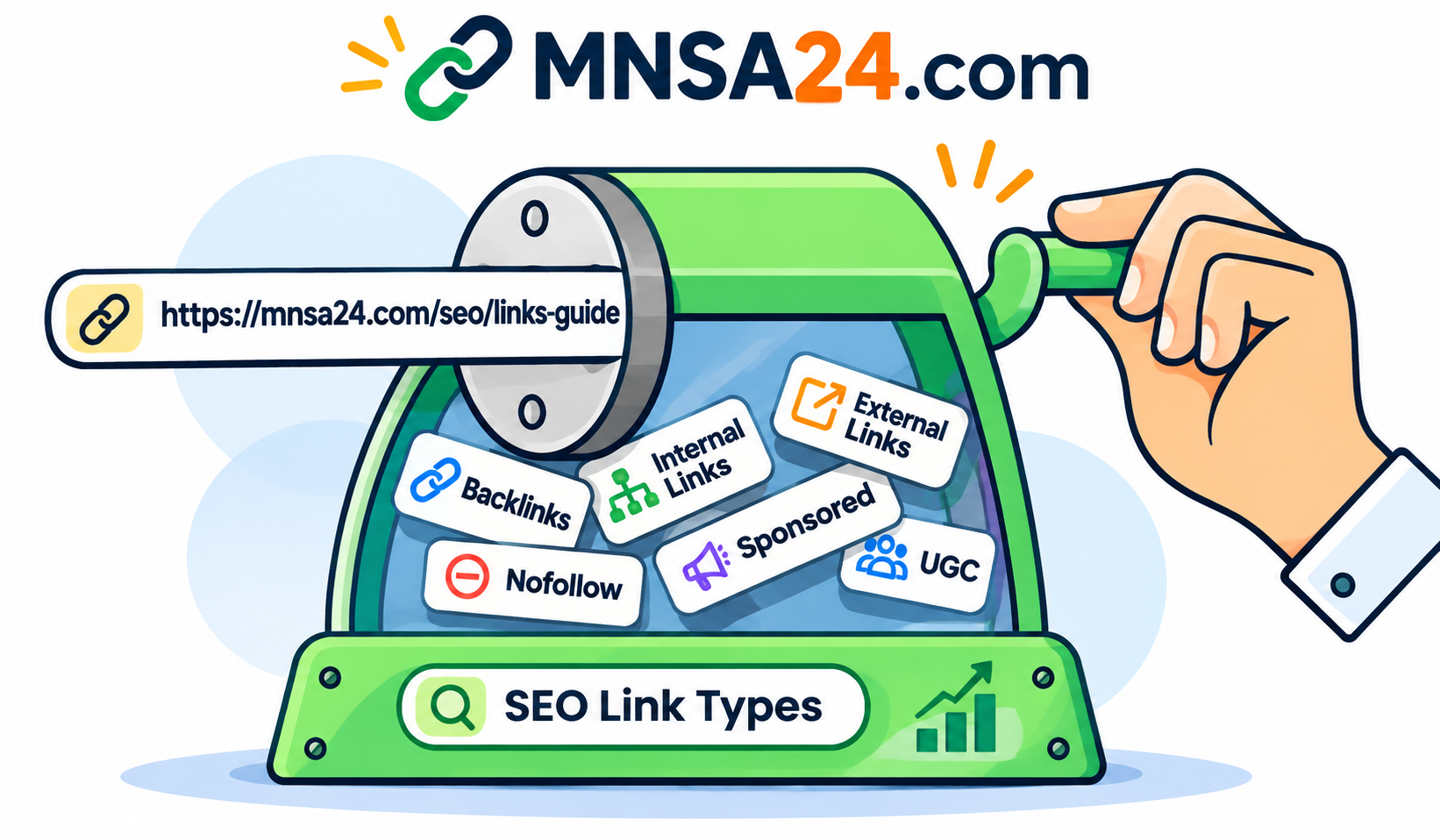
In this guide, we explore the most important SEO link types, including backlinks, internal links, external links, dofollow links, nofollow links, sponsored links, and user-generated content links. We also explain how URL shorteners and branded short links fit into a modern link management strategy.
Key Takeaways
- Backlinks are links from external websites that can contribute to your website's authority and search visibility.
- Internal links connect pages within your website and help search engines discover and understand your content.
- External links provide additional context and direct readers to useful, relevant resources.
- Dofollow is an informal SEO term for a standard link without a qualifying rel attribute.
- Nofollow, sponsored, and UGC attributes help search engines understand the relationship between your website and linked destinations.
- Descriptive anchor text improves navigation and helps users and search engines understand linked content.
- Short links are useful for sharing and tracking URLs across social media, email, advertisements, and other marketing channels.
- A healthy link strategy focuses on relevance, quality, and user experience rather than simply increasing the number of links.
What Are the Main Types of Links in SEO?
SEO links are hyperlinks that connect one web page to another. They help visitors navigate the internet while allowing search engines to discover content and understand relationships between pages.
The main types of links in SEO can be divided into four primary categories: backlinks, internal links, external links, and links with specific attributes.
Other classifications, such as image links, anchor text links, and branded short links, describe how links appear or function.
Here is an overview of the most common link types:
| Link Type | What It Means | Primary Purpose |
|---|---|---|
| Backlinks | Links from other websites to yours | Authority and discovery |
| Internal Links | Links between pages on your website | Navigation and crawling |
| External Links | Links from your website to other websites | References and context |
| Dofollow Links | Standard links without qualifying attributes | Normal link relationships |
| Nofollow Links | Links marked with rel="nofollow" | Qualifying unendorsed links |
| Sponsored Links | Paid or advertising-related links | Identifying commercial relationships |
| UGC Links | Links added by users | Identifying user-generated content |
| Image Links | Clickable images that link to another page | Visual navigation |
| Redirect Links | Links that send visitors to another URL | URL management and redirection |
| Branded Short Links | Short URLs using a recognizable domain | Sharing and brand recognition |
Understanding these categories helps you choose the right link for each situation and avoid common SEO mistakes.
1. Backlinks: Links From Other Websites
Backlinks are hyperlinks that point from another website to your website. They are also known as inbound links or incoming links.
For example, imagine a technology website publishes an article about the best digital marketing tools and includes a link to your website as a useful resource.
That link is a backlink.
Backlinks are important because Google uses links as one of several signals to discover pages and understand their relevance. However, not every backlink has the same value.
A relevant editorial link from a trusted publication is generally more valuable than hundreds of unrelated links from low-quality websites.
Common Types of Backlinks
Editorial Backlinks
Editorial backlinks occur when another website naturally references your content because it provides useful information, original research, statistics, or expert insights.
These links are particularly valuable because they are based on editorial relevance rather than artificial link exchanges.
Guest Post Backlinks
Guest post backlinks appear in articles published on other websites by external contributors.
Guest posting can help you reach new audiences and build professional relationships. However, publishing articles primarily to manipulate rankings through optimized links can violate Google's spam policies.
Resource Page Backlinks
These links appear on pages that collect useful resources, tools, guides, and references related to a particular topic.
For example, a digital marketing blog might include a collection of recommended SEO tools and URL management platforms.
Directory Backlinks
Directory links come from online business directories, industry listings, and specialized resource directories.
Relevant, legitimate directories can help people discover businesses. However, submitting websites to low-quality directories solely to obtain backlinks is not a reliable SEO strategy.
Social Media Links
Social media platforms allow users to share links to websites, articles, and products.
These links can generate referral traffic, increase content exposure, and introduce your website to new audiences. Their presence should not be confused with guaranteed improvements in organic rankings.
How to Build High-Quality Backlinks
A sustainable backlink strategy should prioritize earning links rather than manufacturing them.
Consider these practices:
- Publish original research and useful statistics.
- Create comprehensive guides that answer specific questions.
- Develop resources that other publishers naturally want to reference.
- Build relationships with relevant bloggers and industry professionals.
- Share useful content through appropriate professional communities.
- Avoid purchasing links intended to manipulate search rankings.
Google identifies paid links that pass ranking credit, excessive link exchanges, automated link creation, and other manipulative practices as link spam.
2. Internal Links: Connecting Pages Within Your Website
Internal links connect one page to another page on the same domain.
For example, a website about digital marketing might link an article about SEO strategies to another article explaining keyword research.
Internal linking is an important part of website structure because it helps visitors discover related information and allows search engines to find important pages.
Why Internal Links Matter for SEO
Internal links provide several benefits:
Improve Website Navigation
Visitors can move between related articles without returning to the homepage or searching for information again.
Help Search Engines Discover Pages
Google uses crawlable links to discover pages and understand how website content is connected.
Establish Content Relationships
Linking related articles helps establish topical connections between different sections of your website.
Support Important Pages
Strategic internal links can direct visitors toward important pages, including service pages, product pages, and useful resources.
Internal Linking Best Practices
To build a better internal linking structure:
- Link related articles naturally within your content.
- Use descriptive anchor text rather than generic phrases.
- Connect new articles to relevant older content.
- Avoid excessive links that distract readers.
- Make sure important pages receive links from other pages.
- Regularly identify broken links and orphan pages.
An orphan page is a page that has no internal links pointing to it. Such pages can be harder for search engines and visitors to discover through normal website navigation.
Google recommends ensuring that important pages are linked from at least one other page on your website.
3. External Links: Linking to Other Websites
External links are hyperlinks that direct visitors from your website to another domain.
For example, an article about search engine optimization might reference Google's official documentation or a research report published by an established organization.
External links help readers verify information, explore additional resources, and understand the context of a topic.
Do External Links Help SEO?
External links do not automatically improve rankings simply because they point to authoritative websites.
Their primary value is providing useful references and improving the reader's experience.
When relevant, linking to reliable sources can make your content more transparent and informative.
External Linking Best Practices
- Reference authoritative and relevant sources.
- Link directly to the original research or official documentation whenever possible.
- Use descriptive anchor text.
- Avoid linking to suspicious or misleading websites.
- Qualify paid and user-generated links appropriately.
- Check important external links periodically.
You do not need to mark every external link as nofollow. Standard editorial links are appropriate when you trust and naturally recommend the destination.
4. Dofollow Links: Understanding Standard Links
Dofollow is a common SEO term used to describe a standard hyperlink without a qualifying rel attribute.
Technically, HTML does not contain a specific rel="dofollow" attribute.
A normal hyperlink can allow search engines to follow the link and use it as one of the signals in their search systems.
Example of a Standard Link
<a href="https://example.com/seo-guide">
  Read the SEO Guide
</a>
This is a standard hyperlink without a special rel attribute.
Why Are Dofollow Links Important?
Standard links are commonly used for:
- Internal navigation.
- Editorial references.
- Trusted external resources.
- Natural backlinks.
- Relevant content recommendations.
However, receiving a standard link does not guarantee improved rankings. Google evaluates many signals when determining search results.
5. Nofollow Links: When Should You Use Them?
A nofollow link includes the rel="nofollow" attribute.
Website owners can use this attribute when they do not want to associate their website with a linked destination or when the sponsored and UGC attributes are not appropriate.
Example of a Nofollow Link
<a href="https://example.com"
   rel="nofollow">
  Visit External Website
</a>
Do Nofollow Links Have SEO Value?
Nofollow links are not necessarily worthless.
They can still generate visitors, introduce your brand to new audiences, and support referral traffic.
Google treats nofollow as a hint rather than an absolute directive. Search engines may use these links in different ways, including for discovery.
When Should You Use Nofollow?
Consider using nofollow when:
- You link to a website you do not fully trust.
- You do not want to endorse a particular destination.
- Another relationship does not adequately fit sponsored or UGC.
Do not automatically apply nofollow to every external link. Choose the appropriate attribute based on the actual relationship.
6. Sponsored Links: Identifying Paid Relationships
Sponsored links are hyperlinks associated with advertising, sponsorships, affiliate marketing, or other paid placements.
Google recommends using rel="sponsored" to identify these commercial relationships.
Example of a Sponsored Link
<a href="https://example.com/product"
   rel="sponsored">
  Explore the Product
</a>
This attribute helps search engines understand that the link is part of a commercial arrangement.
When Should You Use Sponsored Links?
Common examples include:
- Paid promotional articles.
- Sponsored blog posts.
- Affiliate product recommendations.
- Commercial partnerships.
- Paid advertising placements.
Using the appropriate attribute is important for maintaining a search-compliant linking strategy.
7. UGC Links: User-Generated Content
UGC stands for User-Generated Content.
These links are added by website visitors rather than the website's editorial team.
Common examples include:
- Blog comments.
- Community discussions.
- Forum posts.
- Public user profiles.
- User-submitted content.
Google recommends using rel="ugc" to identify links that originate from user-generated content.
Example of a UGC Link
<a href="https://example.com"
   rel="ugc">
  User Shared Resource
</a>
You can also combine attributes when necessary.
<a href="https://example.com"
   rel="ugc nofollow">
  Community Link
</a>
This is particularly useful for websites that allow visitors to submit links or participate in public discussions.
8. Anchor Text Links: Why the Clickable Words Matter
Anchor text is the visible, clickable text used in a hyperlink.
For example:
<a href="https://example.com/url-shortener">
  URL Shortener Guide
</a>
In this example, "URL Shortener Guide" is the anchor text.
Anchor text provides information about the destination before visitors click the link. It also gives search engines useful context about the linked page.
Types of Anchor Text
Exact Match
The anchor text uses the exact target keyword.
Example: "URL shortener."
Partial Match
The anchor includes the target keyword within a longer phrase.
Example: "Learn how a URL shortener works."
Branded Anchor Text
The anchor uses a brand or website name.
Example: "MNSA24."
Generic Anchor Text
The anchor uses general phrases such as "learn more" or "visit this page."
Naked URL
The complete URL appears as the clickable text.
Example: "https://example.com."
Anchor Text Best Practices
Use anchor text that is:
- Descriptive and relevant to the destination.
- Short enough to understand quickly.
- Natural within the surrounding sentence.
- Helpful to readers using screen readers.
- Free from unnecessary keyword repetition.
Avoid using the same exact-match keyword excessively across multiple links. Natural language and reader expectations should always come first.
9. Image Links: When Images Become Hyperlinks
An image link is a clickable image that takes visitors to another page when selected.
These links are commonly used for:
- Website logos.
- Promotional banners.
- Product images.
- Navigation icons.
- Affiliate advertisements.
- Featured content thumbnails.
Example of an Image Link
<a href="https://example.com/products">
  <img
    src="product-image.jpg"
    alt="Explore our latest products">
</a>
The alt attribute is particularly important because Google can use the image's alternative text as anchor text when an image serves as a link.
Image Link SEO Tips
- Write descriptive alternative text.
- Use relevant image filenames.
- Compress images to improve loading performance.
- Make sure linked images lead to relevant pages.
- Avoid empty or misleading alt descriptions.
Image links should support navigation and accessibility rather than simply add decorative elements.
10. Redirect Links and Branded Short URLs
Redirect links send visitors from one URL to another destination.
They are widely used in digital marketing, social media campaigns, email marketing, advertising, and printed promotional materials.
A branded short link is a shortened URL that uses a recognizable domain instead of a long, complicated web address.
For example:
Long URL:
https://example.com/blog/digital-marketing/
best-url-shortener-guide-2026
Short URL:
mnsa24.com/guide
The example above illustrates a branded short URL format; the actual availability of a particular custom alias depends on the shortener's configuration.
Why Do Marketers Use Short Links?
Short links provide several practical advantages.
1. Easier Sharing
Short URLs are easier to include in social media posts, messages, email campaigns, and printed materials.
2. Cleaner Marketing Campaigns
A short link makes promotional messages more organized and easier to read.
3. Brand Recognition
A recognizable short domain helps audiences identify the source of a link before opening it.
4. Easier Link Management
Depending on the platform, users may be able to organize, edit, or manage their shortened URLs.
5. Campaign Tracking
URL shorteners that offer analytics can help marketers measure clicks and understand how audiences interact with shared links.
Do Short Links Affect SEO?
This is one of the most important questions for website owners.
Short links do not automatically improve search rankings or replace a proper SEO strategy.
A URL shortener generally works through a redirect that sends visitors to the destination URL.
Google recognizes different types of redirects. Permanent redirects, such as HTTP 301 and 308, indicate that the destination should be treated as the canonical target. Temporary redirects, such as 302 and 307, communicate a temporary move.
The correct redirect depends on the purpose and expected duration of the change.
For SEO, remember these principles:
- Use descriptive, permanent URLs on your own website.
- Keep important content accessible through internal links.
- Use short links primarily for off-site distribution and campaign management.
- Avoid using URL shorteners as a replacement for canonical URLs.
- Make sure your short links redirect reliably to the intended destination.
A short URL can help distribute your content, but it should not be confused with a direct ranking factor.
11. The Difference Between HTML and Elements
Although both HTML elements are associated with links, they perform different functions.
The element creates clickable hyperlinks within the visible content of a webpage.
The Element
<a href="https://example.com/guide">
  Read the Guide
</a>
This creates a clickable link that visitors can follow.
The Element
<link
  rel="canonical"
  href="https://example.com/guide">
This identifies the preferred URL for a webpage.
<link
  rel="stylesheet"
  href="/styles.css">
This connects the webpage to an external CSS stylesheet.
Why Does the Difference Matter for SEO?
The distinction is important because these elements communicate different information.
The element helps visitors and search engines navigate between pages.
Understanding both helps website owners implement their technical SEO correctly.
12. How to Build a Healthy SEO Link Strategy
A successful SEO link strategy is not about collecting as many links as possible.
It is about creating meaningful connections between relevant websites and useful content.
Here are practical steps to improve your link strategy.
Step 1: Audit Your Existing Backlinks
Start by reviewing websites that link to your domain.
Look for relevant websites, unusual patterns, and links that may require further investigation.
Step 2: Improve Your Internal Linking Structure
Review your most important website pages and identify opportunities to connect related content.
For example, a website covering digital marketing could connect articles about:
- Search engine optimization.
- Content marketing.
- Social media marketing.
- Email marketing.
- URL shortening.
- Link tracking.
This creates a more useful browsing experience and helps search engines discover related pages.
Step 3: Earn Relevant Backlinks
Focus on creating content that other publishers have a genuine reason to reference.
Avoid purchasing links for ranking manipulation or participating in automated link-building schemes.
Step 4: Use Appropriate Link Attributes
Make sure your website uses the correct attributes:
The attributes can be combined when multiple descriptions apply.
Step 5: Monitor Broken Links
- Pages returning 404 errors.
- Incorrect redirect destinations.
- Redirect chains.
- Links pointing to deleted content.
- Outdated external references.
Step 6: Track Your Marketing Links
Website analytics can tell you where visitors come from and which campaigns generate engagement.
For off-site campaigns, use distinct tracked links when appropriate.
For example, you could create separate URLs for:
13. How URL Shorteners Support Digital Marketing and Link Management
Modern digital marketing involves distributing links across many platforms.
A URL shortener provides a practical way to organize and distribute links.
When Should You Use a URL Shortener?
Consider using a short link when:
- Sharing long URLs on social media.
- Including links in SMS campaigns.
- Promoting content through messaging applications.
- Creating QR Codes for printed materials.
- Managing links across multiple marketing campaigns.
- Making promotional URLs easier to remember.
Discover MNSA24 for Short URL Management
MNSA24.com provides a URL shortening platform designed to make sharing long web addresses simpler.
Instead of distributing complicated URLs, users can create shorter links that are easier to share across websites, social media platforms, and digital marketing channels.
For bloggers, creators, publishers, and marketers, short URLs can make everyday link distribution more convenient.
You can explore MNSA24 to create short links and simplify the way you share web addresses.
The important distinction is that URL shortening supports link distribution and management. It does not replace backlinks, internal linking, technical SEO, or high-quality content.
14. Common SEO Link Building Mistakes to Avoid
Even experienced website owners can make mistakes when managing links.
Avoid these common problems:
Buying Backlinks to Manipulate Rankings
Purchasing links intended to pass ranking credit can violate Google's spam policies.
Using Irrelevant Anchor Text
Anchor text should accurately describe the linked destination.
Excessive Link Exchanges
Repeated reciprocal linking solely to manipulate search rankings is not a sustainable strategy.
Ignoring Internal Links
A website with useful content but poor internal navigation can make important pages harder to discover.
Overusing Nofollow
Not every external link needs a nofollow attribute. Use the appropriate qualification based on the relationship.
Ignoring Broken Links
Outdated links can frustrate visitors and weaken the overall browsing experience.
Using Short Links for Every On-Site URL
Short links are useful for sharing, but descriptive URLs should generally remain the standard for your website's internal navigation and canonical content.
Disavowing Backlinks Without Investigation
Not every low-quality backlink requires removal or disavowal. Google says most websites do not need the disavow tool. It is intended for specific situations involving considerable spammy or artificial backlinks and a manual action, or a likely manual action, related to those links.
Conclusion: Which Types of Links Matter Most for SEO?
Different types of links serve different purposes in search engine optimization.
Backlinks can contribute to website authority and search visibility. Internal links help visitors and search engines navigate your content. External links provide useful references, while attributes such as nofollow, sponsored, and UGC clarify the relationship between your website and linked destinations.
Meanwhile, branded short links and redirects help businesses distribute content across digital channels and manage their marketing URLs more effectively.
The best approach is to build a balanced link strategy that prioritizes relevance, quality, accessibility, and user experience.
If you want to simplify link sharing across your marketing channels, explore MNSA24.com and discover a more convenient way to create and share short URLs.
Remember: Strong SEO comes from valuable content, a well-structured website, and trustworthy links—not from the number of URLs you create.
Frequently Asked Questions (FAQs)
1. What are the four main types of links in SEO?
The four main categories are backlinks, internal links, external links, and links qualified with attributes such as nofollow, sponsored, and UGC. Each serves a different purpose in website navigation, search discovery, and link relationships.
2. What is the difference between internal and external links?
Internal links connect pages within the same website, while external links direct visitors to pages on different domains. Internal links improve website navigation and content discovery, whereas external links provide additional references and resources.
3. What is the difference between dofollow and nofollow links?
A dofollow link is an informal term for a standard hyperlink without a qualifying rel attribute. A nofollow link includes rel="nofollow" to indicate that the website does not endorse the destination or want to associate itself with it in the usual way.
4. Are backlinks still important for SEO in 2026?
Yes. Links remain among the signals Google uses to discover content and understand page relevance. However, backlink quality, relevance, and context matter more than simply increasing link volume.
5. Do nofollow links help with SEO?
Nofollow links can still generate referral traffic and introduce your content to new audiences. Google treats the attribute as a hint rather than an absolute directive, so its presence does not make a link completely useless.
6. Are sponsored links bad for SEO?
No. Sponsored links are a normal part of digital advertising and affiliate marketing. Website owners should identify paid placements using rel="sponsored" or another acceptable qualifying attribute.
7. What is the difference between sponsored and UGC links?
Sponsored links identify paid relationships, including advertisements and affiliate placements. UGC links identify links contributed by website visitors, such as those in comments and community discussions.
8. Do external links improve Google rankings?
External links do not automatically improve rankings. Their primary purpose is to provide readers with relevant information and credible references. Linking to useful sources can improve the overall quality of an article.
9. Do short links hurt SEO?
Short links do not inherently hurt SEO. They generally work through redirects that send visitors to the destination URL. Their impact depends on proper redirect implementation and the accessibility of the destination page.
10. Can I use a URL shortener for affiliate links?
Yes. URL shorteners can make affiliate URLs easier to share and organize. However, affiliate links should be properly disclosed to readers and qualified with rel="sponsored" where applicable.
11. What is the best anchor text for SEO?
The best anchor text is descriptive, concise, and relevant to the destination page. It should explain what visitors can expect without unnecessarily repeating keywords.
12. How many internal links should an article have?
There is no universal ideal number of internal links. Include links whenever they provide additional value, connect related topics, or help readers navigate to relevant information.
13. Should I disavow toxic backlinks?
Not automatically. Google recommends using the disavow tool cautiously. It is generally intended for websites with a considerable number of artificial or spammy backlinks and a manual action, or a likely manual action, related to those links.
14. What is the best way to track marketing links?
Use a combination of URL tracking parameters, website analytics, and a URL shortener with suitable tracking capabilities. Separate links for different campaigns can help identify which channels generate the most engagement.
15. What is MNSA24?
MNSA24 is an online URL shortening platform that helps users turn long web addresses into shorter links for easier sharing. It can be useful for content creators, bloggers, publishers, and digital marketers who regularly distribute URLs across online channels.