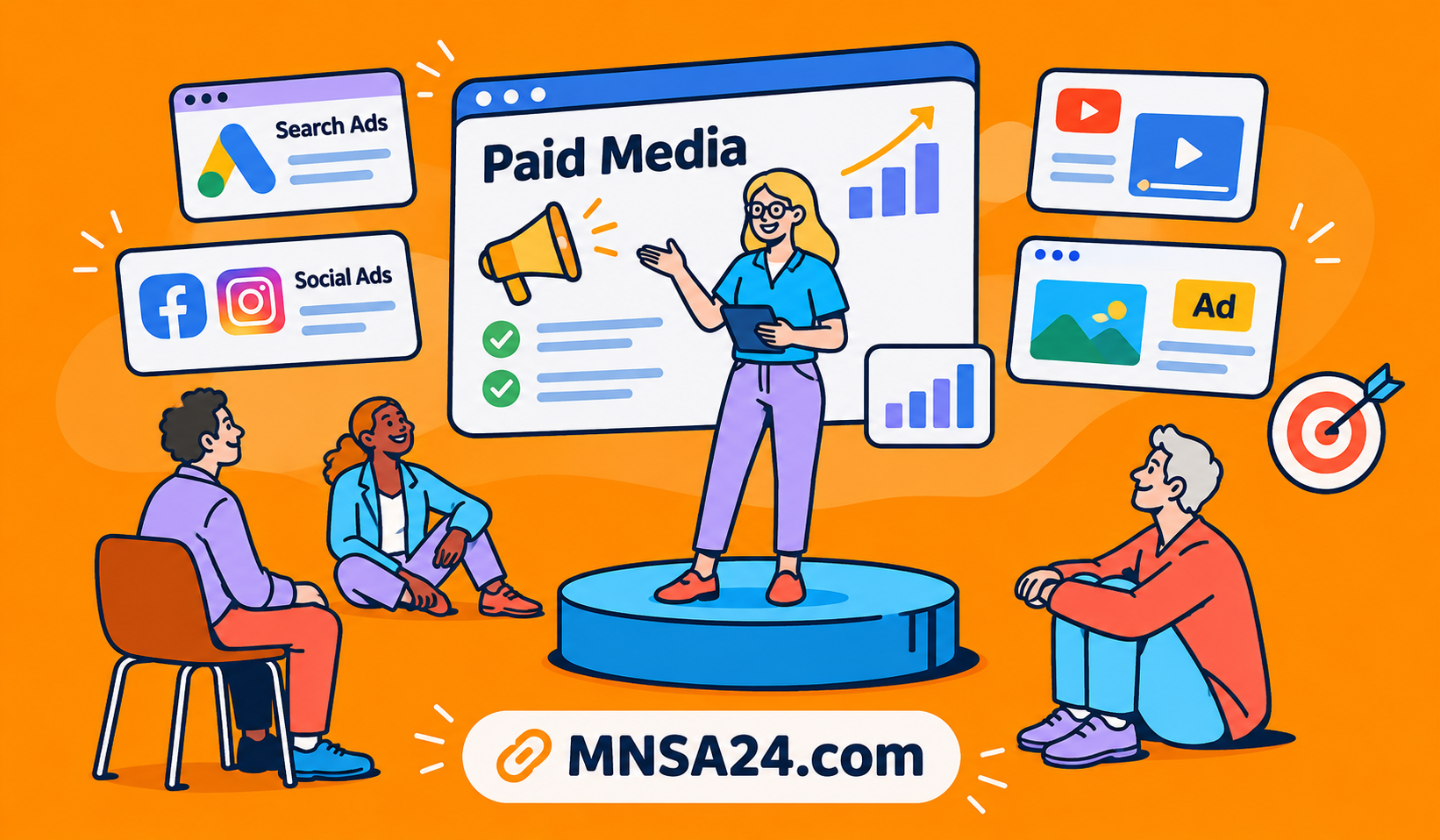
What Is Paid Media? Definition, Types, Examples & Strategy in 2026
Paid media is one of the most widely used approaches in digital marketing. Businesses invest in paid advertising to reach new audiences, promote products, generate leads, and increase sales. Unlike organic marketing, which depends on content, search visibility, and audience growth over time, paid media allows brands to purchase exposure through advertising platforms and third-party channels.
However, spending money on advertising does not automatically guarantee profitable results. A successful paid media campaign requires the right audience, compelling creative, an effective landing page, and reliable performance tracking.
Whether you run a small business, manage a marketing team, or are learning digital marketing, understanding how paid media works can help you make better advertising decisions.
In this guide, we explain what paid media means, explore its main types, compare paid, owned, and earned media, and provide a practical framework for building and measuring an effective paid media strategy.
Key Takeaways
- Paid media refers to promotional exposure businesses purchase to reach audiences through external platforms and channels.
- Common types include paid search, social media advertising, display ads, video advertising, native advertising, and influencer sponsorships.
- Paid, owned, and earned media serve different purposes and work best when integrated into one marketing strategy.
- Advertising costs depend on the platform, competition, targeting, and pricing model.
- Tracking links and UTM parameters help marketers identify which campaigns generate traffic and conversions.
- A successful paid media strategy focuses on measurable business outcomes rather than impressions and clicks alone.
What Is Paid Media?
Paid media is any form of marketing or advertising in which a business pays to distribute promotional content to a selected audience through a platform or channel it does not own.
In simple terms, paid media means paying to get your message in front of people who may be interested in your products or services.
Businesses use paid media to increase brand awareness, attract website visitors, generate leads, promote special offers, and encourage purchases.
For example, when a company pays Google to display its website at the top of search results for a particular keyword, that placement is paid media.
Other examples include sponsored Instagram posts, Facebook advertisements, YouTube video ads, and paid influencer promotions.
Paid media can help businesses reach potential customers faster than relying exclusively on organic growth. However, results depend on the quality of the campaign, the relevance of the audience, and the experience visitors receive after clicking an advertisement.
How Does Paid Media Work?
Paid media typically involves a business paying an advertising platform or publisher to distribute promotional content.
The process usually follows these steps:
- Define the objective: Decide whether the campaign should generate awareness, website traffic, leads, or sales.
- Identify the target audience: Determine the characteristics, interests, location, and behavior of potential customers.
- Choose an advertising channel: Select platforms that match the audience and campaign objective.
- Create the advertisement: Develop the message, images, videos, and call to action.
- Set the budget: Choose a spending limit and bidding approach.
- Launch the campaign: Publish the advertisement and monitor its delivery.
- Measure performance: Evaluate clicks, conversions, costs, and revenue.
- Optimize the results: Improve targeting, creative elements, and landing pages based on actual performance.
The most important part is what happens after someone interacts with an advertisement. A campaign may generate thousands of clicks but still fail if visitors do not take the intended action.
Paid Media vs. Owned Media vs. Earned Media
Paid, owned, and earned media are three important components of a digital marketing strategy. Each has a different purpose, cost structure, and level of control.
Understanding their differences helps businesses decide where to invest their resources.
1. Paid Media
Paid media involves purchasing advertising space or promotional exposure on external platforms.
Examples include:
- Google Ads search campaigns.
- Facebook and Instagram sponsored posts.
- TikTok advertisements.
- YouTube video advertising.
- Paid influencer collaborations.
- Sponsored articles and display advertisements.
Main purpose: Reach new audiences, generate demand, and drive measurable actions.
2. Owned Media
Owned media refers to digital channels and assets that a business controls.
Examples include:
- Company websites.
- Blogs and educational resources.
- Email newsletters.
- Landing pages.
- Mobile applications.
- Brand-managed social media profiles.
Main purpose: Build lasting relationships, provide information, and convert visitors through channels the business controls.
3. Earned Media
Earned media is exposure a business receives through independent recommendations, mentions, or coverage rather than purchasing the placement directly.
Examples include:
- Customer reviews.
- Organic social media shares.
- News coverage.
- Editorial mentions.
- Unpaid recommendations.
- Community discussions.
Main purpose: Build credibility, strengthen reputation, and increase trust.
Comparison of Paid, Owned, and Earned Media
| Feature | Paid Media | Owned Media | Earned Media |
|---|---|---|---|
| Control | Limited by platform rules | High | Limited |
| Direct placement cost | Usually required | Maintenance costs | Not usually paid per placement |
| Reach | Can be purchased | Depends on audience growth | Depends on third-party exposure |
| Examples | Search and social ads | Website and email | Reviews and press coverage |
| Main benefit | Faster exposure | Long-term control | Independent credibility |
| Main challenge | Advertising costs | Time and maintenance | Unpredictable results |
How Should Businesses Combine Them?
The strongest marketing strategies do not depend on a single media type.
For example, a business launching a new product might:
- Use paid social advertisements to introduce the product.
- Direct visitors to an owned landing page containing product details.
- Encourage satisfied customers to share genuine reviews.
- Use email marketing to communicate with interested visitors.
This approach creates a connected marketing system in which each channel supports the others.
Types of Paid Media Channels
Paid media includes several advertising formats. The best choice depends on your audience, industry, budget, and marketing objectives.
Below are eight common paid media channels businesses use in 2026.
1. Paid Search Advertising
Paid search advertising allows businesses to display sponsored listings when users search for specific products, services, or information.
Google Ads and Microsoft Advertising are common platforms for this type of campaign.
For example, a company selling accounting software might target searches such as:
- Best accounting software for small businesses.
- Online invoicing software.
- Business accounting solutions.
Paid search is particularly useful when potential customers are already looking for a product or service.
Best for: Lead generation, website traffic, and capturing existing customer demand.
2. Paid Social Media Advertising
Paid social advertising involves promoting content through social networking platforms.
Popular advertising channels include:
- Facebook Ads.
- Instagram Ads.
- TikTok Ads.
- LinkedIn Ads.
- Pinterest Ads.
- X Ads.
Businesses can use these platforms to reach audiences based on available targeting options, such as interests, demographics, professional characteristics, and previous interactions.
For example, an online clothing store could use Instagram advertising to showcase new products to audiences interested in fashion.
Best for: Brand awareness, product discovery, engagement, and sales campaigns.
3. Display Advertising
Display advertising uses visual advertisements, including banners, images, and interactive formats, across websites and applications.
These advertisements are commonly delivered through advertising networks and programmatic platforms.
A travel company, for example, might display advertisements promoting holiday packages on websites related to tourism.
Display advertising can also support remarketing campaigns, allowing businesses to reach people who previously visited their websites, subject to applicable platform and privacy requirements.
Best for: Brand visibility, remarketing, and reaching broader audiences.
4. Video Advertising
Video advertising uses promotional videos distributed through digital platforms.
YouTube is one of the most recognizable examples, although video advertisements are also available across social media applications and streaming services.
Common formats include:
- In-stream video advertisements.
- Short-form video promotions.
- Sponsored video content.
- Video discovery advertisements.
Video advertising can demonstrate how a product works, explain a service, or communicate a brand message through visual storytelling.
Best for: Product demonstrations, brand awareness, and audience education.
5. Native Advertising
Native advertising refers to paid promotional content designed to fit naturally within the appearance and format of the platform where it appears.
Examples include sponsored articles, promoted recommendations, and sponsored content within digital publications.
Unlike traditional banner advertisements, native advertising often resembles the surrounding editorial or platform content.
However, sponsored material should always be clearly identified as advertising to avoid misleading readers.
Best for: Educational campaigns, content promotion, and reaching readers interested in specific topics.
6. Influencer Marketing and Sponsored Content
Influencer marketing involves collaborating with content creators who have established audiences on social media or other digital platforms.
Businesses may pay influencers to review products, demonstrate services, publish sponsored videos, or introduce new brands.
Partnerships can involve different creator categories:
- Nano influencers: Typically 1,000–10,000 followers.
- Micro influencers: Typically 10,000–100,000 followers.
- Macro influencers: Typically 100,000–1 million followers.
- Mega influencers: Typically more than 1 million followers.
These ranges are commonly used industry classifications rather than universal definitions.
A smaller creator may offer access to a highly relevant niche audience, while a larger creator may provide broader exposure.
The best choice depends on audience relevance, engagement quality, campaign objectives, and cost.
Best for: Product discovery, audience trust, and targeted brand promotion.
7. Audio and Podcast Advertising
Audio advertising allows businesses to reach listeners through podcasts, music streaming services, and digital audio platforms.
Common formats include:
- Podcast sponsorships.
- Host-read advertisements.
- Pre-roll audio advertisements.
- Mid-roll promotional messages.
- Streaming audio campaigns.
For example, a fitness company might sponsor a health and wellness podcast to reach people interested in exercise and nutrition.
Best for: Audience awareness, niche marketing, and building brand familiarity.
8. Affiliate and Partner Advertising
Affiliate marketing is a performance-based promotional model in which businesses reward publishers or partners for generating qualifying actions.
Depending on the agreement, affiliates may receive commissions for sales, registrations, or other measurable results.
Common affiliate promotional channels include:
- Blogs and review websites.
- Product comparison websites.
- Email newsletters.
- Content creator websites.
- Niche online communities.
Businesses should establish clear commission terms, attribution rules, and disclosure requirements before launching an affiliate program.
Best for: Ecommerce businesses, lead generation, and performance-based marketing.
How Much Does Paid Media Cost?
There is no universal price for paid media. Advertising costs vary according to the platform, industry, competition, audience, campaign objective, and quality of the advertisement.
Most digital advertising platforms use auction-based systems, although some placements are purchased through fixed-price agreements or negotiated contracts.
Understanding the most common pricing models makes it easier to plan an advertising budget.
Common Paid Media Pricing Models
| Pricing Model | Meaning | Common Use |
|---|---|---|
| CPC | Cost Per Click | Search and social advertising |
| CPM | Cost Per 1,000 Impressions | Brand awareness campaigns |
| CPA | Cost Per Acquisition | Sales and lead generation |
| CPL | Cost Per Lead | Lead generation campaigns |
| CPV | Cost Per View | Video advertising |
1. Cost Per Click (CPC)
With CPC advertising, the advertiser pays when someone clicks the advertisement.
This model is useful when the primary objective is generating website visits or attracting potential customers.
2. Cost Per Thousand Impressions (CPM)
CPM measures how much an advertiser pays for every 1,000 advertisement impressions.
It is commonly used for campaigns focused on visibility and brand awareness.
3. Cost Per Acquisition (CPA)
CPA measures the cost of generating a desired action, such as a purchase, registration, or qualified lead.
It helps businesses evaluate how efficiently their advertising budget produces results.
4. Cost Per Lead (CPL)
CPL measures the amount spent to acquire one potential customer who submits their contact information or completes a lead form.
It is particularly useful for service businesses and B2B marketing campaigns.
Important: A low CPC does not necessarily mean a successful campaign. A more expensive click may generate better-quality leads and higher revenue. Always evaluate advertising costs against the value of the results.
Benefits and Disadvantages of Paid Media
Paid media can help businesses accelerate growth, but it also comes with limitations that should be considered before investing.
Benefits of Paid Media
1. Faster Audience Reach
Paid advertising allows businesses to reach audiences without waiting for organic content to gain visibility.
2. Audience Targeting
Advertising platforms provide targeting options that help businesses reach people who may be interested in their products or services.
3. Measurable Performance
Most advertising platforms provide reporting tools that show impressions, clicks, spending, and available conversion data.
4. Budget Flexibility
Businesses can establish spending limits, adjust campaigns, and allocate budgets according to performance.
5. Faster Marketing Experiments
Advertisers can test different messages, images, videos, and audience segments to identify which combinations perform better.
Disadvantages of Paid Media
1. Ongoing Costs
Advertising visibility usually decreases when campaigns stop receiving funding.
2. Increasing Competition
Popular keywords and audiences may become more expensive when multiple advertisers compete for the same placements.
3. Ad Fatigue
People may become less responsive when they repeatedly see the same advertisements.
4. Platform Dependency
Businesses must follow advertising policies and may be affected by changes in platform algorithms, pricing, and targeting capabilities.
5. Attribution Challenges
A click does not always lead directly to a purchase. Customers may interact with several channels before making a decision, making campaign attribution more complicated.
Paid media should therefore complement a broader marketing strategy rather than replace organic growth and customer relationship building.
How to Build an Effective Paid Media Strategy
A successful paid media strategy starts with a clear objective and a realistic budget. Instead of launching advertisements simply to generate traffic, businesses should build campaigns around measurable outcomes.
Follow these practical steps.
Step 1: Define Your Marketing Objectives
Start by identifying what you want your advertising campaign to achieve.
Common objectives include:
- Increasing brand awareness.
- Generating website traffic.
- Collecting qualified leads.
- Promoting a new product.
- Increasing online sales.
- Encouraging app installations.
Choose one primary objective for each campaign. Trying to achieve everything simultaneously can make performance difficult to evaluate.
Step 2: Identify Your Target Audience
Understanding your audience helps you select the appropriate advertising channels and create relevant messages.
Consider:
- Age range and location.
- Interests and preferences.
- Professional background.
- Purchasing behavior.
- Problems your product or service solves.
- Platforms your potential customers use.
Avoid targeting audiences simply because they are large. Relevance is often more valuable than reach alone.
Step 3: Choose the Right Advertising Channels
Select platforms based on where your audience spends time and how they make purchasing decisions.
For example:
- Google Ads can help capture people actively searching for products.
- Instagram and TikTok can support visual product discovery.
- LinkedIn can help businesses reach professional audiences.
- YouTube can support demonstrations and educational campaigns.
You do not need to advertise everywhere. Start with the channels most closely connected to your objectives.
Step 4: Create Relevant Advertising Content
Your advertisement should communicate a clear benefit and give viewers a reason to take action.
Effective advertisements typically include:
- A clear headline.
- A relevant image or video.
- A specific value proposition.
- A strong call to action.
- A destination that matches the advertisement.
Avoid exaggerated promises or misleading claims. Advertising messages should accurately represent the product or service.
Step 5: Build a Suitable Landing Page
Sending paid traffic to an irrelevant or poorly designed page can waste your advertising budget.
Your landing page should:
- Match the advertisement's message.
- Load efficiently on mobile devices.
- Explain the offer clearly.
- Include an obvious next step.
- Provide relevant information.
- Make contact or purchasing options easy to find.
A good advertisement attracts attention, but the landing page helps turn that attention into meaningful action.
Step 6: Set Up Campaign Tracking
Campaign tracking helps businesses understand which advertisements generate clicks and where visitors come from.
One useful method is adding UTM parameters to destination URLs.
UTM parameters are tracking tags added to a URL to identify campaign information in analytics platforms such as Google Analytics 4.
For example:
https://example.com/product?utm_source=facebook&utm_medium=paid_social&utm_campaign=summer_sale
This URL identifies Facebook as the traffic source, paid social as the medium, and summer sale as the campaign.
You can also use an appropriate URL shortener, such as MNSA24.com, to create a shorter and easier-to-share version of a long campaign URL.
For better organization, create separate tracked links for different advertisements, platforms, and campaign variations.
This makes it easier to distinguish traffic from individual placements.
Step 7: Monitor and Optimize Campaign Performance
Once your campaign is running, review its performance regularly.
Pay attention to:
- Click-through rate (CTR).
- Cost per click (CPC).
- Cost per acquisition (CPA).
- Conversion rate.
- Return on ad spend (ROAS).
- Qualified leads.
- Revenue generated.
Do not make decisions based on one metric alone. For example, a campaign with a high click-through rate may still perform poorly if visitors leave without completing the desired action.
Use actual conversion data to determine which campaigns deserve additional investment.
How to Track Paid Media Campaigns Using Short Links
Tracking is an important part of paid media because businesses need to understand what happens after someone clicks an advertisement.
A URL shortener can make campaign links easier to share, organize, and distinguish across different marketing channels.
MNSA24.com provides a URL shortening service that can help marketers create shorter links for promotional campaigns and distribute them across digital platforms.
Here are some practical ways to use short links in paid media campaigns.
1. Create Separate Links for Different Advertising Platforms
Instead of using the same shortened URL everywhere, create different links for individual platforms.
For example:
- One link for Facebook advertising.
- Another link for Instagram campaigns.
- A separate link for LinkedIn promotions.
- Another link for email marketing.
This makes campaign organization easier and helps distinguish the destinations used in different placements.
2. Use UTM Parameters Before Shortening
Add your UTM parameters to the original destination URL before creating the shortened link.
This allows compatible analytics platforms to identify campaign sources and mediums after visitors reach your website.
Always test the final destination to ensure the tracking parameters remain intact.
3. Organize Links by Campaign
Use descriptive link names or custom aliases where supported.
For example, a campaign promoting a seasonal product could use an identifiable link name such as:
mnsa24.com/summer-offer
The availability of custom aliases depends on your account settings and service features.
4. Evaluate the Results Using Analytics Tools
Use your advertising platform and website analytics tools to measure the complete customer journey.
A URL shortener should not be treated as a replacement for Google Analytics 4, advertising dashboards, or conversion tracking systems.
Instead, use each tool for its intended purpose.
MNSA24 can simplify link sharing, while your analytics platform helps evaluate website sessions, conversions, and campaign outcomes.
Paid Media vs. Organic Media: Which Is Better?
Paid and organic marketing are not necessarily competing strategies. They solve different problems.
Paid media can accelerate exposure and help businesses reach audiences more quickly, while organic marketing builds visibility through content, search engines, social media activity, and customer relationships.
| Comparison | Paid Media | Organic Media |
|---|---|---|
| Initial exposure | Can be accelerated through spending | Usually takes time |
| Direct advertising cost | Required for paid placements | No direct placement payment |
| Long-term visibility | Depends on continued investment | Can continue through existing content |
| Audience growth | Can be targeted | Builds through discovery and engagement |
| Control | Subject to platform rules | Depends on the channel |
| Best use | Campaign acceleration | Sustainable audience development |
Which Approach Should You Choose?
For businesses with an advertising budget and a clear campaign objective, paid media can provide faster opportunities to reach potential customers.
For businesses with limited budgets, organic marketing may be a more practical starting point.
However, combining both approaches often creates a stronger long-term strategy.
For example, a business can publish useful educational articles to attract organic visitors while using paid advertisements to promote its most important products and services.
Common Paid Media Mistakes to Avoid
Even well-funded advertising campaigns can fail when businesses overlook basic marketing principles.
Avoid these common mistakes:
1. Advertising Without Clear Objectives
Launching campaigns without defining measurable goals makes it difficult to determine whether the investment was successful.
2. Targeting the Wrong Audience
A large audience does not guarantee relevant traffic. Focus on people who are more likely to need your product.
3. Ignoring Landing Page Quality
Even an effective advertisement can waste money when its destination is confusing, slow, or unrelated to the offer.
4. Measuring Clicks Instead of Conversions
Clicks are useful indicators, but they do not automatically represent sales or qualified leads.
5. Using the Same Creative for Every Platform
Different platforms have different content formats and audience expectations. Adapt advertisements accordingly.
6. Failing to Track Campaign Sources
Without consistent tracking, it becomes difficult to identify which advertising channels are generating meaningful results.
7. Increasing the Budget Too Early
Do not scale a campaign simply because it receives many impressions or clicks. Confirm that its results justify the additional spending.
Building a More Effective Digital Advertising Strategy
Paid media is an important part of modern digital marketing, but successful advertising requires more than purchasing exposure.
Businesses need to understand their audiences, choose appropriate channels, create relevant advertisements, and provide useful landing page experiences.
They also need a reliable measurement process that connects advertising activity with meaningful business results.
Start with a clear objective, test your campaigns on a manageable budget, and use consistent tracking methods to understand which channels perform best.
For marketers managing multiple advertising platforms, MNSA24.com can help simplify the sharing of long campaign URLs through shortened links.
The key is to focus on what matters most: attracting the right audience, delivering genuine value, and turning advertising investment into measurable results.
Frequently Asked Questions About Paid Media
What Is Paid Media in Digital Marketing?
Paid media in digital marketing refers to promotional content that businesses pay to distribute through external platforms. Common examples include Google Ads, Facebook advertisements, sponsored social media posts, display banners, and paid influencer campaigns.
What Are the Main Types of Paid Media?
The main types include paid search advertising, paid social media advertising, display advertising, video advertising, native advertising, audio advertising, influencer sponsorships, and affiliate marketing.
What Is the Difference Between Paid Media and Organic Media?
Paid media involves purchasing promotional exposure, while organic media relies on unpaid visibility through content, search engines, social media engagement, and other discovery methods. Both approaches can support the same marketing objectives.
What Are Examples of Paid Media?
Examples include sponsored Google search results, Instagram advertisements, Facebook campaigns, YouTube video ads, sponsored articles, podcast promotions, and paid influencer collaborations.
Is Paid Media the Same as Paid Advertising?
The terms are closely related and are often used interchangeably. Paid media describes the broader distribution approach, while paid advertising commonly refers to the advertisements and placements used within that approach.
How Much Should a Business Spend on Paid Media?
There is no universal advertising budget. Spending depends on business size, industry, campaign objectives, competition, and expected customer value. Start with a manageable budget, test performance, and increase spending when the results justify it.
How Do You Measure Paid Media Performance?
Businesses commonly measure impressions, clicks, click-through rate, cost per click, conversion rate, cost per acquisition, and return on ad spend. The most useful metrics depend on the campaign objective.
What Is the Difference Between Paid, Owned, and Earned Media?
Paid media involves purchasing exposure, owned media consists of channels a business controls, such as its website and email list, and earned media comes from independent mentions, reviews, recommendations, and organic coverage.
Can a URL Shortener Help Track Paid Media Campaigns?
A URL shortener can help organize and distribute campaign links across different advertising platforms. When combined with UTM parameters and compatible analytics tools, shortened URLs can support campaign attribution and make it easier to identify traffic sources.
Is Paid Media Suitable for Small Businesses?
Yes. Small businesses can use paid media to reach targeted audiences and promote specific products or services. Starting with a limited budget and measuring actual results can help reduce unnecessary spending.
About MNSA24
MNSA24.com provides a convenient URL shortening service that helps users create shorter, more manageable links for sharing across websites, social media platforms, and digital marketing campaigns.